
TL;DR
- TMJ disorders affect the jaw joint and the muscles that move it, causing jaw pain, clicking and headaches.
- Clenching, grinding, posture and stress often play a part, and neck problems can add to it.
- Most people improve without surgery through therapy, jaw exercises and habit changes.
- Get urgent care if your jaw locks and will not open or close, or after a blow to the face.
What TMJ pain is
The temporomandibular joint (TMJ) connects your lower jaw to your skull, just in front of the ear. Problems with the joint or the chewing muscles around it are called TMJ disorders. Learn more on our TMJ pain page.
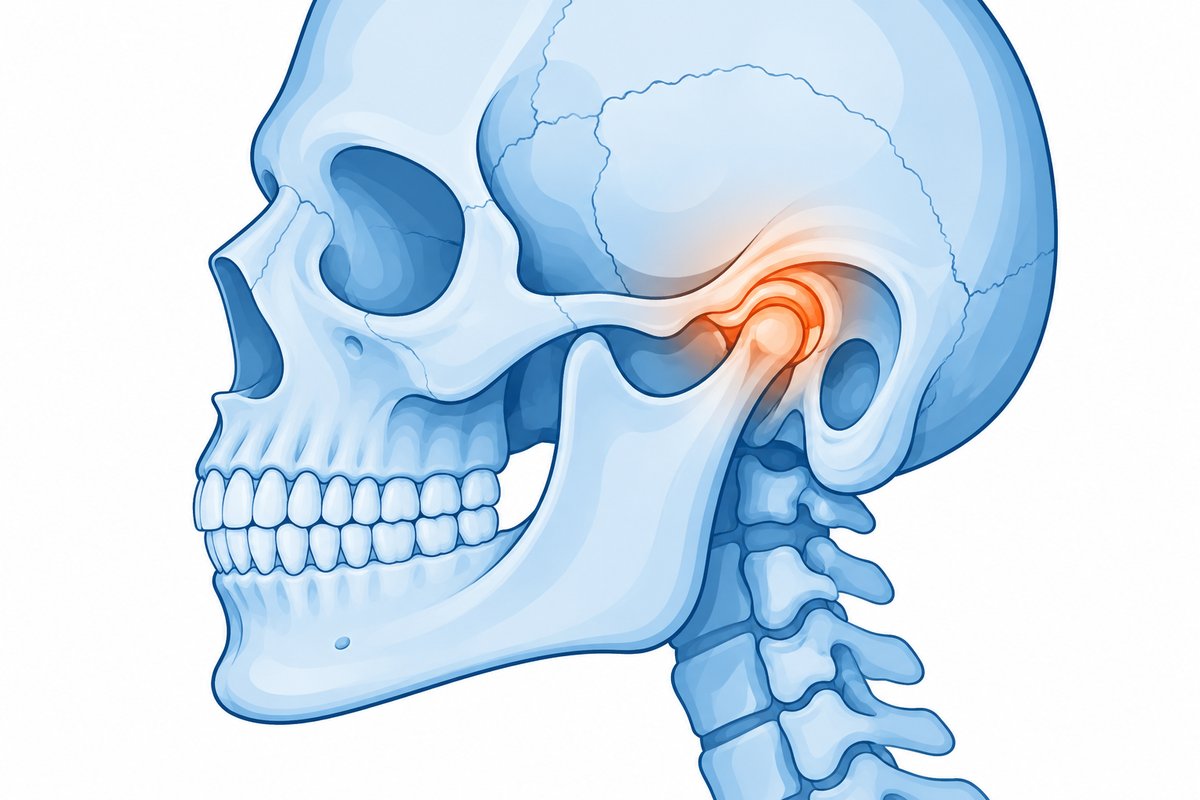
Common symptoms
- Pain in the jaw, face, temple or around the ear
- Clicking, popping or grinding when you open your mouth
- A jaw that feels stuck or tired when chewing
- Headaches and neck pain
- Teeth that ache even though your dentist finds nothing wrong
Common causes
- Clenching or grinding, often at night
- Stress, which tightens the jaw muscles
- Forward head posture and neck tension
- Arthritis in the jaw joint
- An injury to the jaw or face
Non-surgical TMJ treatment options
- Physical therapy for the jaw and neck, including gentle exercises and posture work
- Laser therapy to help calm pain in the joint and muscles. See our laser therapy service.
- A night guard from your dentist if you grind your teeth
- Stress and habit changes, such as resting the jaw and avoiding gum or very hard foods
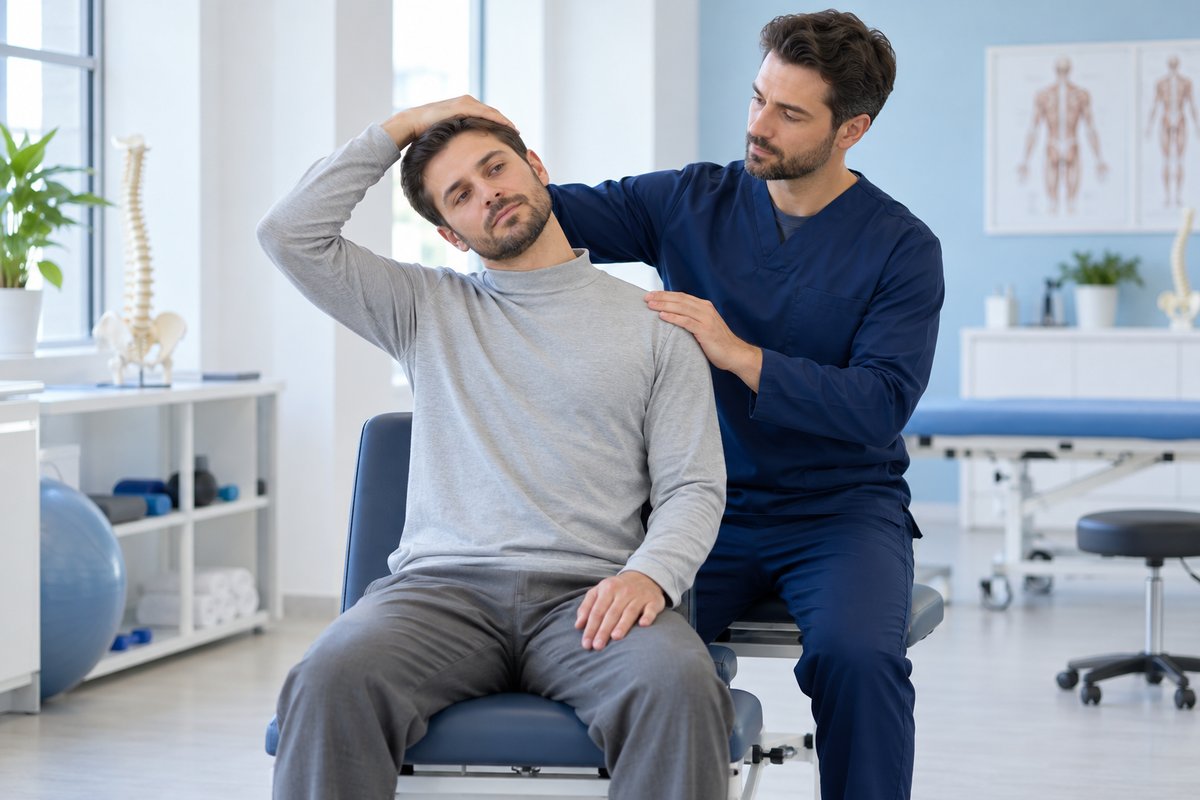
Because the neck often adds to jaw pain, we look at it too. Learn more on our neck pain page.
Home tips that help many people
- Eat softer foods for a while and cut food into small pieces
- Keep your teeth slightly apart and your jaw relaxed during the day
- Use gentle warmth on tight jaw muscles
- Avoid resting your chin on your hand
When to get urgent care
Go to urgent care or an emergency room if your jaw locks open or closed, you had a blow to the face, or jaw pain comes with facial swelling and fever.
TMJ care at Bay Way Pain Medical Care
At our Bay Parkway office in Brooklyn, your visit starts with an exam of your jaw, neck and posture. Then we build a non-surgical plan, often with physical therapy.
Frequently Asked Questions
Can TMJ be treated without surgery?
Yes. Most people improve with therapy, jaw exercises and habit changes.
What causes TMJ pain?
Common causes include clenching or grinding, stress, posture, arthritis and jaw injuries.
Can TMJ cause headaches and ear pain?
Yes. Pain often spreads to the temple, ear and neck.
Does a night guard help TMJ?
It can help people who grind their teeth at night. Your dentist fits it.
When should I see a doctor for jaw pain?
If it lasts more than a few weeks, keeps coming back or makes eating hard.
Ready to talk about your pain?
Bay Way Pain Medical Care, 6010 Bay Pkwy, 6th Floor, Suite 603, Brooklyn. We accept most insurances.
Request an Appointment Call (718) 576-2001