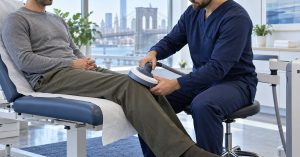
TL;DR
- Gel (hyaluronic acid) and PRP are two common injections for knee pain, especially knee arthritis.
- Gel adds lubrication to the joint. PRP uses a concentrate of your own platelets.
- Both usually take a few weeks to work, and results vary from person to person.
- Cortisone shots work faster but tend to wear off sooner. We cover how they compare below.
Gel vs PRP at a glance (with cortisone for comparison)
| Gel (hyaluronic acid) | PRP | Cortisone (for comparison) | |
|---|---|---|---|
| What it is | A lubricating gel like your joint fluid | A concentrate of your own platelets | A steroid medicine |
| Main goal | Cushion and lubricate the joint | Support the tissue’s own repair | Calm inflammation |
| How fast | Often a few weeks | Often a few weeks | Often within days |
| How many shots | One to a few, depending on the product | Often one to three | Usually one at a time |
| Often used for | Knee osteoarthritis | Knee osteoarthritis, some tendon problems | Flare-ups, swelling |
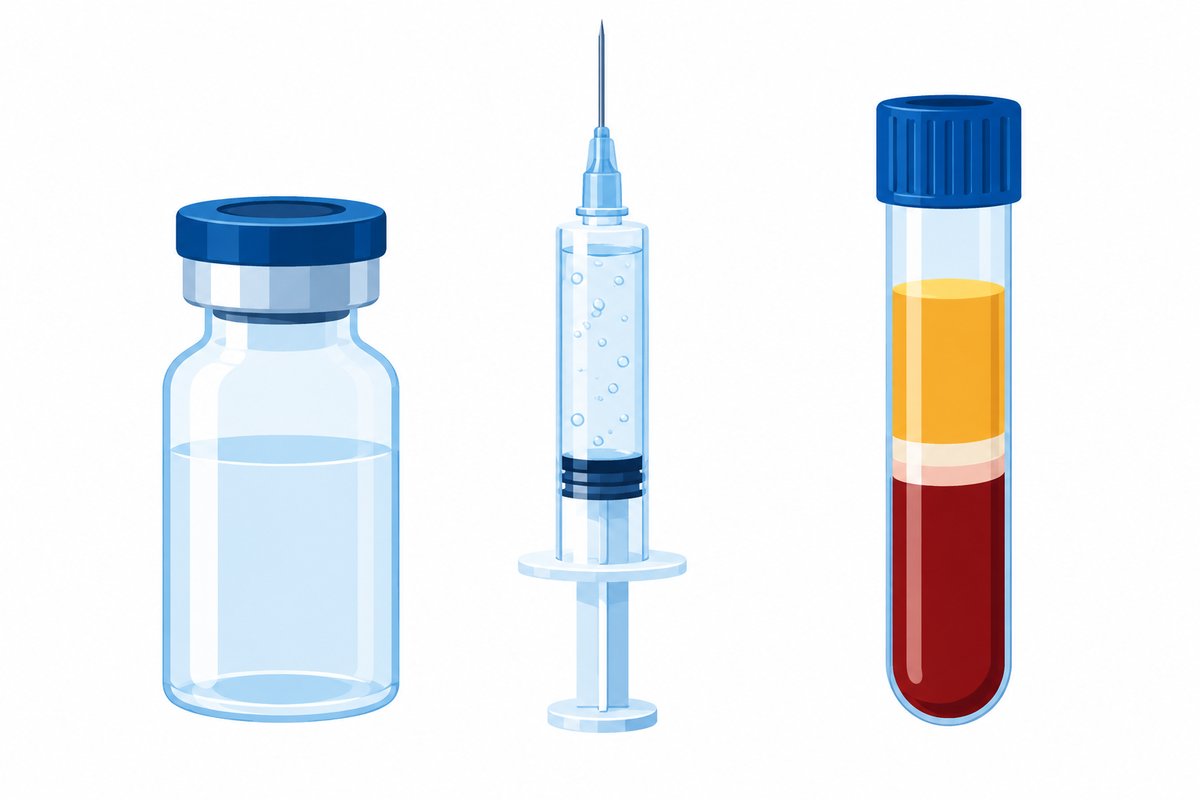
How long any of them helps varies a lot from person to person.
Gel injections (hyaluronic acid) for knee pain
Gel injections, also called visco gel or viscosupplementation, add hyaluronic acid to the knee. It is similar to the natural fluid that lubricates and cushions the joint, and it thins out with arthritis.
- Good to know: it is mainly used for knee osteoarthritis when exercise, therapy or medicine have not been enough.
- The trade-off: it can take a few weeks to notice a change, and some people notice little difference.
- More detail: read our guide to visco gel injections for knee pain.
PRP injections for knee pain
PRP stands for platelet-rich plasma. A small sample of your blood is taken and spun to concentrate the platelets, which are then injected into the knee.
- Good to know: it uses your own blood, so there is no foreign substance.
- The trade-off: it can take a few weeks to work, and research is still growing.
- More detail: see our PRP therapy page.
How cortisone shots compare
Many people ask about cortisone first, so here is how it compares. A cortisone shot puts a steroid medicine into the knee to calm inflammation.
- It often works within a few days, faster than gel or PRP.
- The relief tends to be shorter, and doctors usually limit how often you can have one in the same joint.
- It can raise blood sugar for a few days, which matters if you have diabetes.
Gel and PRP work differently and take longer to start, which is why they are often discussed when the goal is longer-term care of an arthritic knee.
Which knee injection is right for you?
There is no single best shot. The right choice depends on:

- What is causing the pain. Arthritis, a flare-up of swelling and a tendon problem point to different options.
- How long you have had it. A sudden flare is different from years of wear.
- What you have already tried. Many people start with exercise and physical therapy before any injection.
- Your health history. Diabetes, blood thinners and past injections all matter.
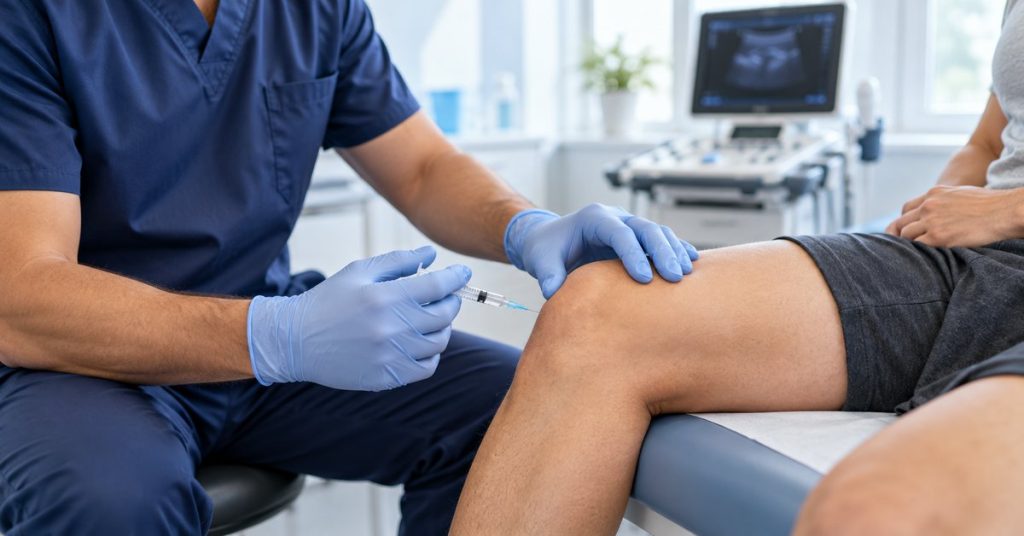
Some clinics use ultrasound to guide the needle to the right spot. Ask whether your injection will be ultrasound-guided.
Questions to ask before a knee injection
Bring these to your appointment. The answers help you and your doctor choose with confidence.
- What is causing my knee pain, and how sure are we?
- Which injection do you suggest for me, and why that one?
- How long until I might notice a change, and how long could it last?
- How many shots will I need?
- Will the injection be guided by ultrasound?
- What should I do, and avoid, in the days after?
- What else should I be doing alongside it, such as exercises or physical therapy?
- What is the plan if this does not help enough?
A good answer to the last question matters. Injections work best as one step in a plan, not as the whole plan.
What to expect after a knee injection
- Most people go home the same day and walk out of the office.
- Mild soreness or swelling for a day or two is common.
- Rest the knee for a day or so if your doctor recommends it.
- Call your doctor if the knee becomes hot, very red or more swollen, or if you get a fever.
Knee injections at Bay Way Pain Medical Care
At our Bay Parkway office in Brooklyn, a knee injection starts with an evaluation of your knee pain. We look at the cause, what you have tried and your goals, then explain which option fits, if any, and why. Insurance coverage differs between these injections, so ask our team when you call.
Frequently Asked Questions
Is gel or PRP better for knee pain?
They work differently. Gel lubricates the joint, and PRP uses your own platelets to support the tissue. Your doctor will look at your knee and history before suggesting either one.
Is gel or cortisone better for knee pain?
They do different jobs. Cortisone calms inflammation and usually works faster. Gel lubricates the joint and is mainly used for osteoarthritis, and it can take a few weeks to work.
How long do knee injections last?
It varies a lot. Gel and PRP usually take a few weeks to start working, and how long they help differs from person to person. Cortisone works faster but tends to wear off sooner.
Do knee injections hurt?
Most people feel a brief pinch and pressure. Mild soreness for a day or two afterward is common.
Where can I get knee injections in Brooklyn?
Bay Way Pain Medical Care is at 6010 Bay Pkwy in Brooklyn. Call (718) 576-2001 to book an evaluation.
Ready to talk about your pain?
Bay Way Pain Medical Care, 6010 Bay Pkwy, 6th Floor, Suite 603, Brooklyn. We accept most insurances.
Request an Appointment Call (718) 576-2001