TL;DR
- Localized cryotherapy applies very cold air to one painful area for a few minutes.
- It is used to calm pain, swelling and muscle tightness, often before exercise or therapy.
- Sessions are short and drug-free, with no downtime.
- It is not right for people with certain cold sensitivities or circulation problems.
- Results vary. For many people, cryotherapy for pain works best as one part of a plan, not on its own.
What localized cryotherapy is
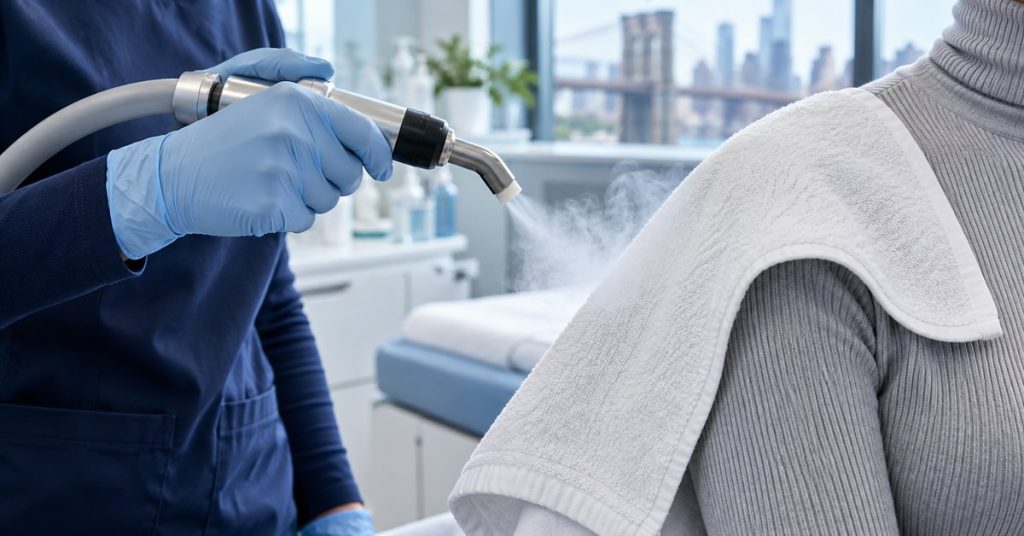
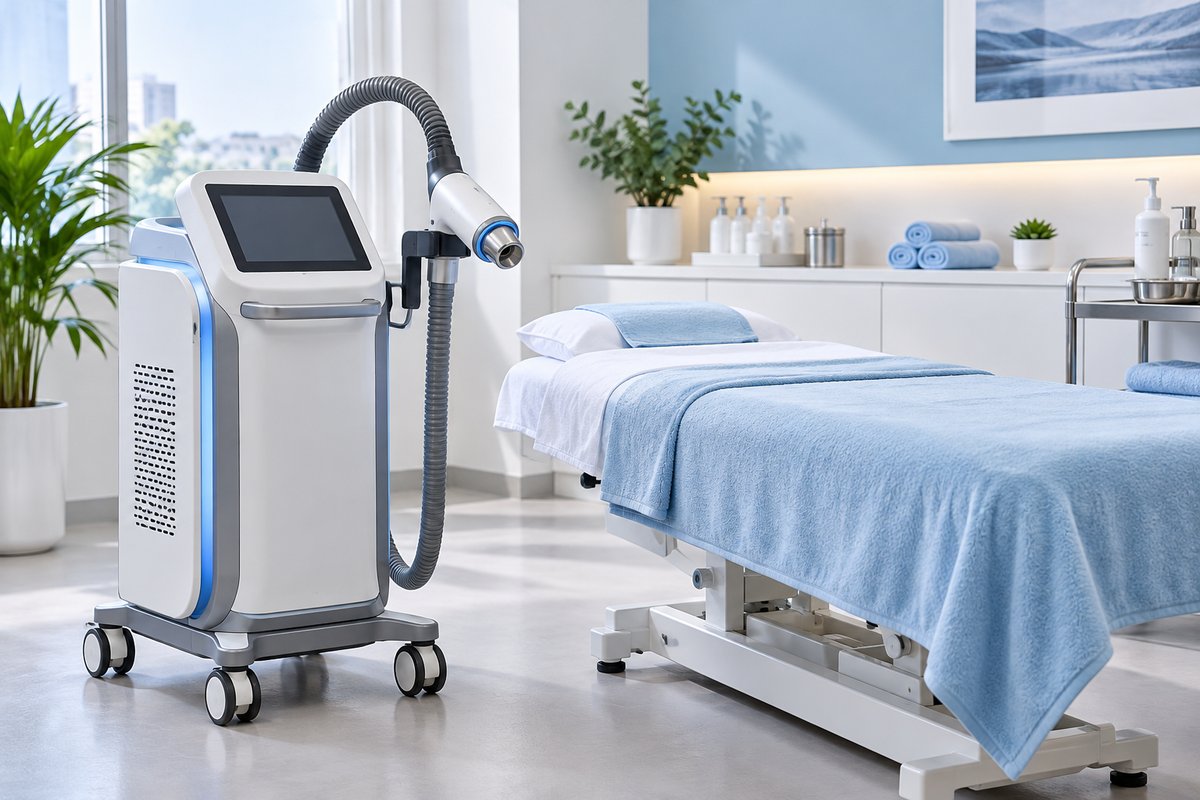
Cryotherapy means cold therapy. Localized cryotherapy uses a handheld device that blows very cold air onto one area, such as a knee, shoulder or the lower back, rather than cooling the whole body. If you are looking into cryotherapy for pain, this targeted approach is the kind used in an outpatient pain practice. Learn more on our cryotherapy page.
How it works
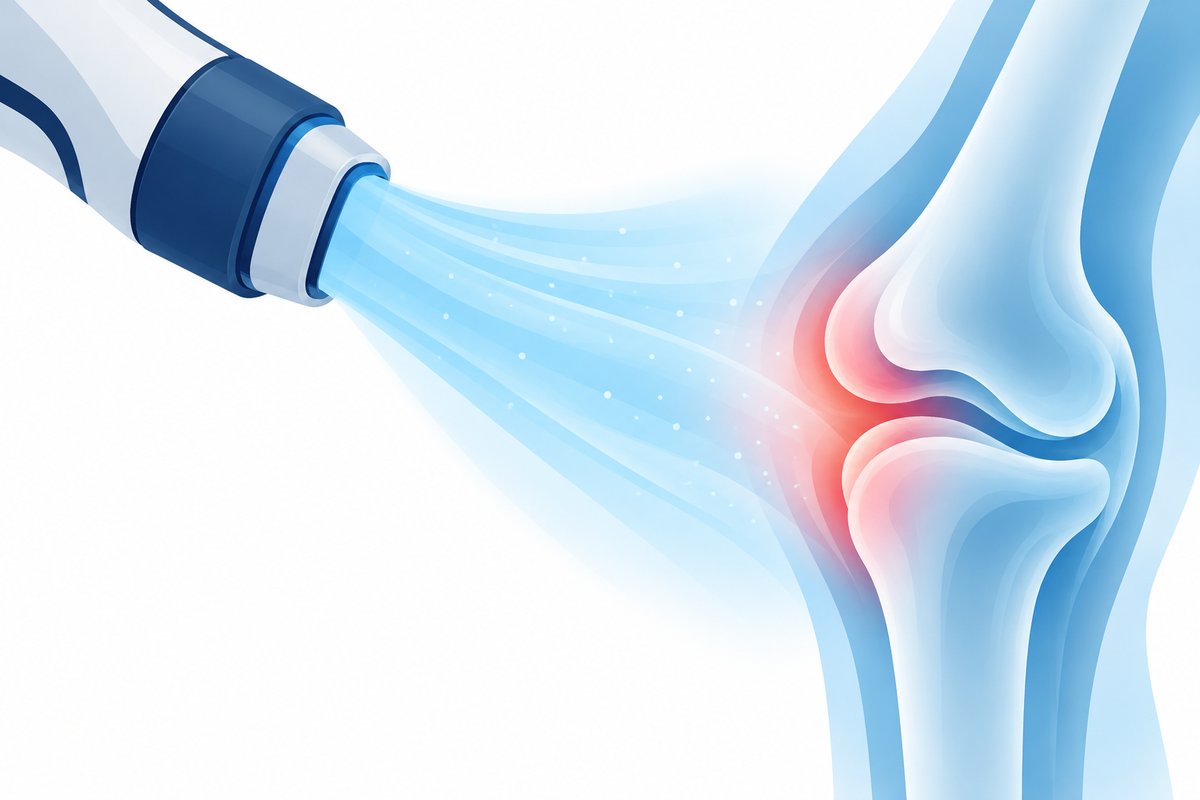
Cold narrows blood vessels and slows nerve signals for a short time. That can ease pain and swelling. As the area warms back up, blood flow increases. The effect is similar to an ice pack, but faster and more targeted.
What cryotherapy may help
- Joint pain and swelling, such as knee or shoulder pain
- Sore, tight muscles
- Flare-ups of arthritis
- Pain from overuse or minor sports injuries
It works best as part of a plan with exercise or other therapies. Learn more on our knee pain page. If stiff, aching joints are your main problem, our arthritis page explains the wider range of options.
Who is a good candidate for cryotherapy for pain
Localized cryotherapy is often considered for people who:
- Have pain and swelling in one area, such as a knee, shoulder, elbow, ankle or the lower back
- Find that ice helps at home but want a quicker, more focused treatment
- Want a drug-free option to use alongside exercise or therapy
- Get tight and sore before or after therapy sessions
It is less useful when pain is mainly from a pinched nerve or when the cause is not yet clear. In those cases, the first step is a proper evaluation, so the plan matches what is actually causing the pain.
What a session feels like
The clinician moves the nozzle steadily over the area for a few minutes. It feels very cold, then tingly and numb. The skin is checked during treatment, and you can go back to your day right after.
Before the session
Wear clothing that lets the area be reached easily, such as shorts for a knee or a loose top for a shoulder. The skin should be clean and dry, with no lotion. Tell the clinician about any recent changes in your health or medicines.
After the session
The skin may look pink for a short time as it warms. Many people find movement feels easier for a while afterward, which is one reason cryotherapy is often done before exercise. Let the clinician know if the skin stays very red, blistered or painful.
How many sessions you may need
There is no fixed number. Some people notice short-term relief after one session. Others use it over several visits while they work on strength and movement. How often you come depends on the problem, how your body responds and the rest of your plan.
Your clinician will check how you are doing as you go. If cryotherapy is not adding much, the plan can be changed.
Cryotherapy vs ice packs and other options
An ice pack at home is simple and useful. Localized cryotherapy cools the area faster and can be aimed at a smaller spot, and a clinician watches the skin the whole time. Neither one fixes the underlying cause on its own.
Other drug-free treatments work in different ways. Some use gentle warmth or energy to support tissue, such as laser or TECAR. For a plain comparison of a few of these, see TECAR vs shockwave vs laser therapy. Many plans also include physical and occupational therapy to build strength and protect the joint over time.
Who should not have cryotherapy
Tell your clinician if you have Raynaud’s phenomenon, cold allergy (cold urticaria), poor circulation, reduced feeling in the skin, or an open wound in the area. Cryotherapy is not used in those situations.
Also mention diabetes with numb feet or hands, heart or blood vessel conditions, or pregnancy. These do not always rule it out, but the clinician needs to know before treatment.
When pain needs prompt care
Cold therapy is for ongoing aches and flare-ups, not emergencies. Seek urgent or emergency care if you have:
- A joint that is suddenly very swollen, hot and red, especially with fever
- A limb that looks deformed or cannot bear weight after an injury
- New weakness, numbness or loss of bladder or bowel control
- Pain with chest pain or trouble breathing
Cryotherapy at Bay Way Pain Medical Care
At our Bay Parkway office in Brooklyn, cryotherapy is often combined with other drug-free treatments. For heel pain, read shockwave therapy for plantar fasciitis.
Many patients come to us from Bensonhurst, Bath Beach, Dyker Heights and Bay Ridge. Bay Way Pain Medical Care accepts Medicare and Medicaid. Coverage for a specific treatment depends on your plan, so our office can help you check before you start.
When you call or book, we will ask about your pain and your health history and set up a first visit. At that visit, we look at the painful area, talk through what may be causing it and explain whether cryotherapy fits your plan. You can schedule an appointment online or contact our office with questions.
Frequently Asked Questions
Is localized cryotherapy the same as whole-body cryotherapy?
No. Localized cryotherapy cools one area with a handheld device. Whole-body cryotherapy uses a chamber that cools most of the body.
Does cryotherapy hurt?
It feels very cold, then tingly and numb. Most people find it uncomfortable rather than painful, and the clinician checks your skin throughout.
How long does a cryotherapy session take?
Usually a few minutes per area. Your full visit may be longer if cryotherapy is paired with exercise or another treatment.
Is cryotherapy better than an ice pack?
It is faster and more targeted, and a clinician watches the skin while it is done. Both work by cooling the area, and an ice pack is still a useful tool at home.
Who should avoid cryotherapy?
People with Raynaud’s, cold allergy, poor circulation, reduced skin feeling or an open wound in the area. Tell your clinician about any of these before treatment.
Does cryotherapy for pain really work?
For many people, it eases pain and swelling for a short time, which can make exercise and therapy easier. Results vary, and it is usually used as one part of a wider plan.
How often can you do localized cryotherapy?
It depends on the problem and your plan. Your clinician will suggest how often to come and adjust it based on how you respond.
Is cryotherapy in Brooklyn covered by insurance?
Coverage depends on your plan. Bay Way Pain Medical Care accepts Medicare and Medicaid, and our office can help you check your benefits before you start.
Ready to talk about your pain?
Bay Way Pain Medical Care, 6010 Bay Pkwy, 6th Floor, Suite 603, Brooklyn. We accept most insurances.
Request an Appointment Call (718) 576-2001