TL;DR
- Shockwave therapy for plantar fasciitis sends sound-wave pulses into the heel to help long-standing heel pain.
- It is usually considered when heel pain has lasted months despite stretching, shoes and rest.
- Sessions are short, done in the office, and need no needles or downtime.
- It works best as part of a plan that includes stretching and footwear changes.
What plantar fasciitis is
The plantar fascia is a thick band of tissue that runs along the bottom of your foot, from the heel to the toes. When it becomes irritated, it causes heel pain that is often worst with the first steps in the morning or after sitting for a while.
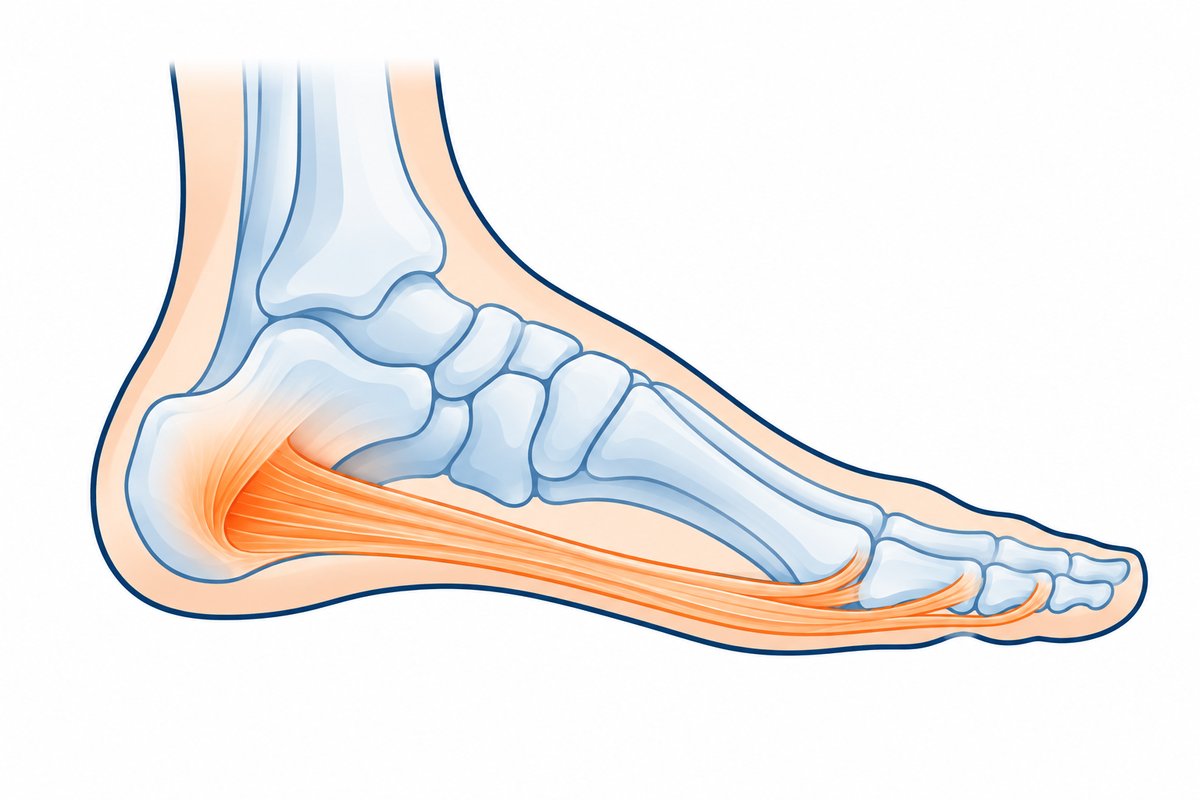
Many cases settle with stretching, supportive shoes and rest. Some do not. When heel pain hangs on for months, it is often called chronic plantar fasciitis, and that is where shockwave therapy comes in.
Common triggers
- Long hours standing or walking on hard floors
- Worn-out or flat shoes, or going barefoot often
- Tight calf muscles or a tight Achilles tendon
- A sudden increase in walking, running or exercise
- Extra body weight, which adds load to the heel with every step
How shockwave therapy for plantar fasciitis works
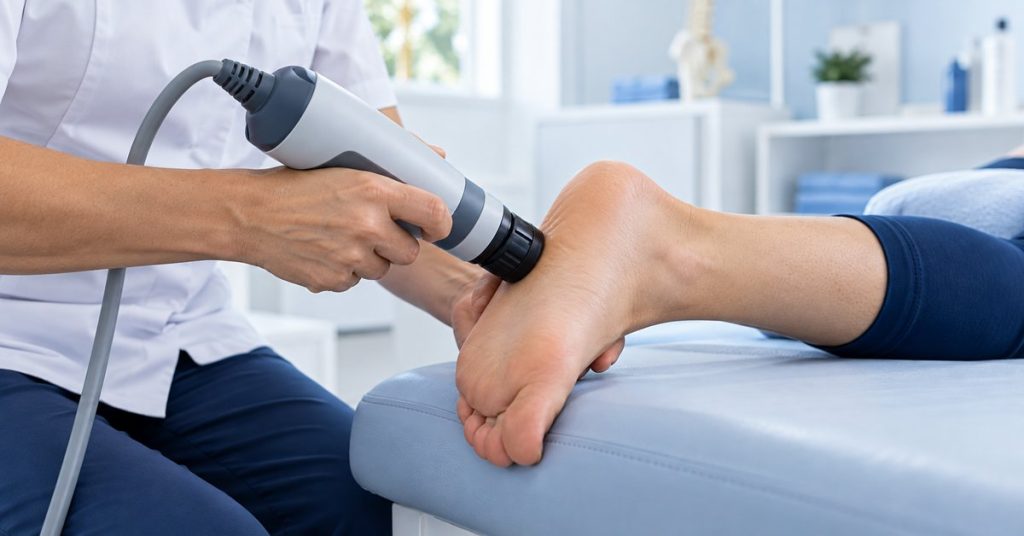
Shockwave therapy, also called extracorporeal shockwave therapy or ESWT, uses a handheld applicator to send pulses of sound energy through the skin into the painful area.
- The pulses are thought to stimulate the body’s own repair process in the tissue.
- They may also calm pain signals in the area for a while after treatment.
- No needles, no incisions and no medication are involved.
You can read more about the treatment itself on our shock wave therapy page.
Who shockwave therapy may help
Shockwave is most often considered for people who:
- Have had heel pain for three months or more
- Have already tried stretching, better shoes or inserts, and rest
- Want to avoid injections or surgery, or have not done well with them
It may also be used for heel pain linked to a heel spur, since the pain usually comes from the irritated tissue rather than the spur itself.
Whether it fits you depends on what is causing your pain, which is why it starts with an evaluation.
Shockwave therapy for a heel spur
A heel spur is a small bony growth on the underside of the heel bone. Many people have one and never feel it. When a spur shows up on an X-ray in someone with heel pain, the pain often comes from the irritated plantar fascia that attaches nearby.
Shockwave therapy for a heel spur is aimed at that sore tissue, not at the bone. It does not break up or remove the spur. The goal is to calm the area so walking and standing feel easier.
What a shockwave session feels like
- You sit or lie down with your foot supported.
- A gel is applied to the heel and the clinician places the applicator on the sore spot.
- You feel tapping pulses. It can be uncomfortable for a few minutes, and the intensity can be adjusted.
- A session usually takes 10 to 20 minutes.
- Most people need a short series of sessions, often spaced about a week apart.
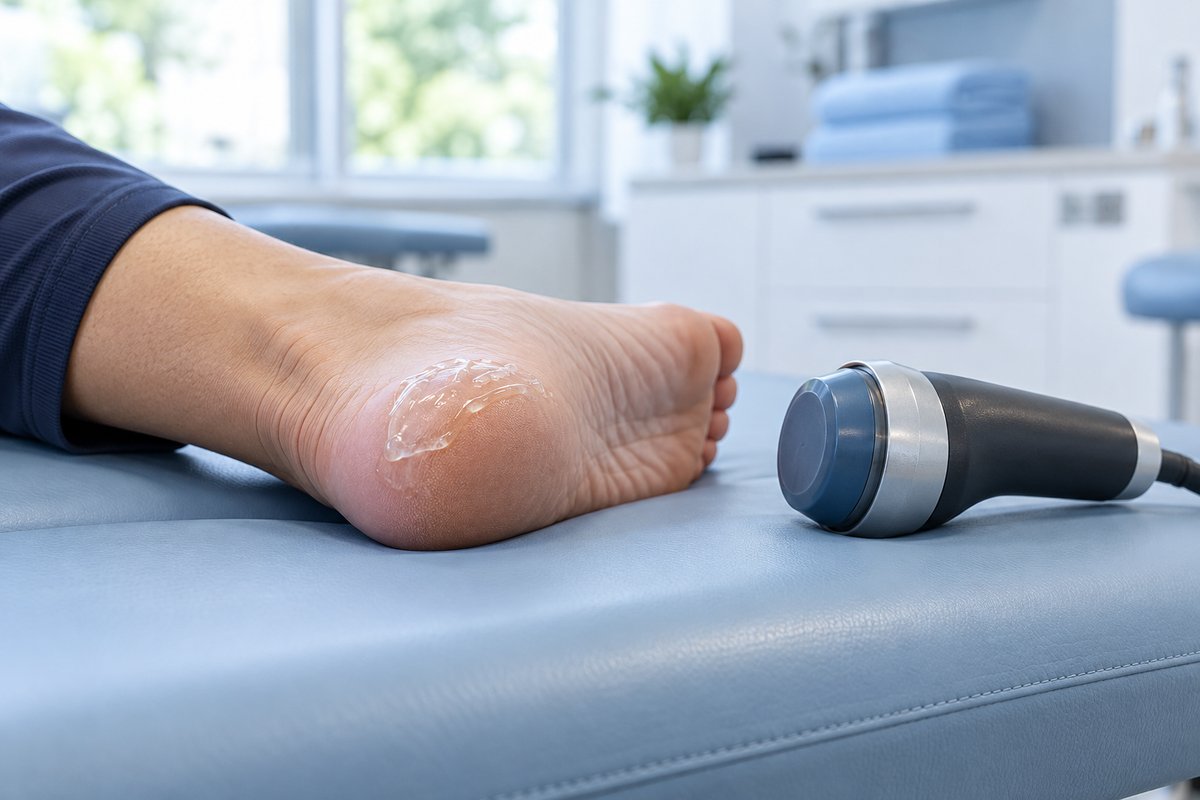
Most people walk out and go about their day. Some feel mild soreness or redness for a day or two.
How long until shockwave for heel pain helps
Shockwave for heel pain is not usually an instant fix. Some people feel a little easier after the first few sessions. For many others, change builds slowly over several weeks after the series ends, as the tissue settles.
Results vary with how long you have had pain, your time on your feet, and your home routine. We check in on your progress during the series and adjust the plan if the heel is not responding.
Shockwave vs other heel pain treatments
Shockwave is one option among several. Others include:
- Stretching and night splints, which are often the first step.
- Shoe inserts or orthotics to take pressure off the heel.
- Physical therapy to work on calf flexibility and foot strength.
- Injections, which some people choose for faster short-term relief.
These are often combined. For a full look at heel pain options, see our plantar fasciitis page. If stretching and strength work are part of your plan, our physical and occupational therapy team can guide you through them.
What you can do at home between sessions
Home care does a lot of the work in heel pain. These simple steps may help shockwave do its job:
- Stretch your calves a few times a day, especially before your first steps in the morning.
- Roll the arch of your foot gently over a ball or a cold water bottle.
- Wear supportive shoes at home too, instead of going barefoot on hard floors.
- Ease back into exercise rather than jumping into long walks or runs.
Who should not have shockwave therapy
Tell your clinician if you are pregnant, have a bleeding disorder or take blood thinners, have an infection or open wound in the area, or have a tumor in the area being treated. Shockwave may not be right for you in those cases.
When heel pain needs prompt care
Some heel pain is not plantar fasciitis. See a doctor soon if your heel pain follows a fall or injury, if you cannot put weight on the foot, or if there is numbness or tingling in the foot. Swelling, warmth and redness with fever can be a sign of infection. For severe pain after an injury, or signs of a serious infection, seek urgent or emergency care.
Shockwave therapy for heel pain at Bay Way Pain Medical Care
At our Bay Parkway office in Brooklyn, your visit starts with an evaluation of your foot and your history. If shockwave therapy for plantar fasciitis fits, we explain how many sessions to expect and what you can do at home between visits.
Our office is an easy trip for people in Bensonhurst, Bath Beach, Dyker Heights and Gravesend. When you call or book, we ask a few questions about your heel pain and set up an evaluation. Bay Way Pain Medical Care accepts Medicare and Medicaid. Coverage for a specific treatment depends on your plan, so please check with our office before you start. To learn more about the treatment in general, see our post on what to expect from shockwave therapy in Brooklyn. When you are ready, you can schedule your visit online.
Frequently Asked Questions
Does shockwave therapy work for plantar fasciitis?
Shockwave is a common option for plantar fasciitis that has not improved with stretching and rest. Results vary from person to person, so it is used as part of a wider plan that includes stretching and good footwear.
How many shockwave sessions do I need for heel pain?
Most people need a short series, often three to five sessions about a week apart. Your clinician will suggest a number after your evaluation, and the plan can change based on how your heel responds.
Does shockwave therapy for the heel hurt?
It can feel uncomfortable for a few minutes while the pulses are applied. The intensity can be turned down if needed, so tell your clinician how it feels.
Can shockwave help a heel spur?
Heel spur pain usually comes from the irritated tissue around the spur, and shockwave is sometimes used for that pain. It does not remove the spur itself.
Can I walk after shockwave therapy?
Yes. Most people walk out and return to normal activity afterward. Your clinician may suggest avoiding high-impact exercise for a short time.
How long does it take for shockwave therapy to work on plantar fasciitis?
It varies. Some people notice a change after a few sessions, while for many others improvement builds gradually over several weeks after the series ends.
What are the side effects of shockwave therapy for heel pain?
The most common effects are mild soreness, redness or tenderness in the heel for a day or two. Tell your clinician if anything feels unusual or does not settle.
Is shockwave therapy covered by insurance?
Coverage depends on your plan. Bay Way Pain Medical Care accepts Medicare and Medicaid, and our office can help you check what your plan includes before you start.
Ready to talk about your pain?
Bay Way Pain Medical Care, 6010 Bay Pkwy, 6th Floor, Suite 603, Brooklyn. We accept most insurances.
Request an Appointment Call (718) 576-2001