TL;DR: Shoulder pain after a stroke is common and is usually a combination of problems rather than one. Perineural injection therapy using dextrose is one option used for the nerve-related part of that pain. It is a low-concentration injection placed around the nerve rather than into the joint, it is not a cure for the underlying stroke-related changes, and it works best alongside rehabilitation rather than instead of it.
Why the shoulder hurts after a stroke
Pain in the affected shoulder is one of the more common complications after a stroke, and it interferes with exactly the thing that matters most, which is rehabilitation. If moving the arm hurts, the arm gets used less, and function is lost faster.
The cause is rarely single. Weak muscles around the shoulder allow the joint to sit poorly, the joint capsule tightens, and nerves in the area become sensitised. Spasticity may pull the arm into positions that load structures unevenly. Any plan that treats only one of these tends to disappoint.
What perineural injection therapy is
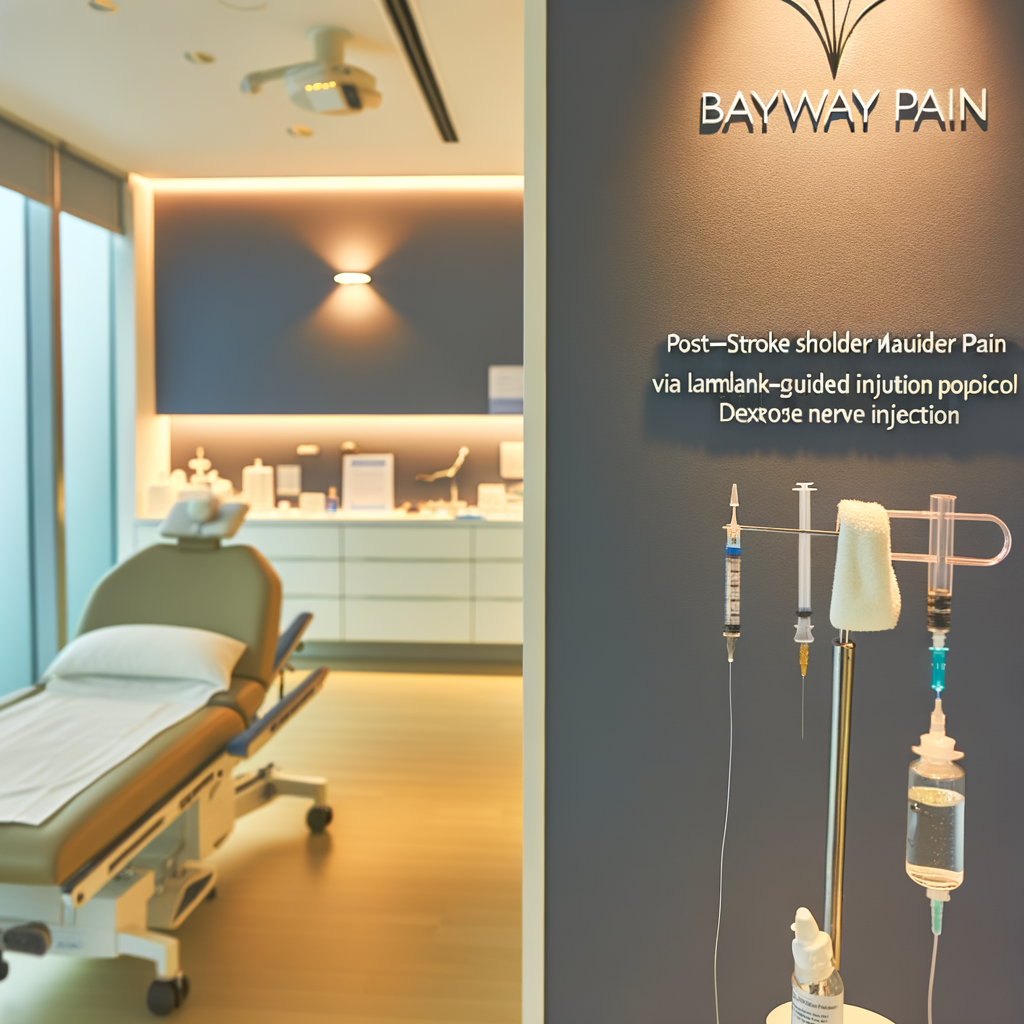
Perineural injection therapy, sometimes called PIT, involves injecting a low-concentration dextrose solution around irritated superficial nerves rather than into a joint or deep structure. The aim is to settle the sensitivity of the nerve itself.
It is a different intent from a steroid injection into the joint, which targets inflammation inside the joint, and different again from treatment aimed at the muscles. It is used where the pain pattern suggests the nerve is contributing.
PIT therapy at Bay Way Pain is delivered after an assessment that establishes whether the presentation fits.
How the injection is placed
Superficial nerves around the shoulder can be located by anatomical landmarks, which is how these injections are commonly placed. Ultrasound guidance is used in some settings for deeper or less predictable targets.
The injections are shallow, the volumes are small, and several sites may be treated in one visit depending on where symptoms are. Most people describe brief stinging rather than significant pain.
What the evidence supports, stated honestly
Dextrose perineural injection has been studied for several painful conditions, and post-stroke shoulder pain is among them, but the studies are generally small and the protocols vary. It is reasonable to describe it as an option with supporting evidence and without strong proof, which is an honest position rather than a discouraging one.
What that means practically: it is worth considering when the presentation fits and other approaches have not helped, with a clear plan for reviewing whether it is working rather than repeating it indefinitely.
Who it suits, and who it does not
It may be considered when shoulder pain is limiting rehabilitation, when the pattern suggests nerve involvement, or when injections into the joint have not helped.
It is not appropriate, or needs careful handling, in these situations:
- Active infection anywhere near the injection site
- Uncontrolled diabetes, since the solution is a sugar solution
- Anticoagulant medication, which needs reviewing before any injection
- Suspected fracture, dislocation or a rotator cuff tear that has not been assessed
- Pain that is mainly driven by spasticity, which is a different treatment problem
Tell the clinician the full medication list and the stroke history, including timing, since that affects what is reasonable to expect.
Where it fits in stroke rehabilitation
The injection is not the treatment, it is what makes the treatment possible. Reduced pain creates a window for range of movement work, positioning and strengthening through physical and occupational therapy, and that is what changes function.
Handled the other way round, with injections repeated and no rehabilitation, the shoulder tends to end up back where it started.
Frequently Asked Questions
Does it hurt?
The injections are superficial and brief. Most people report stinging during the injection that settles quickly. No sedation is needed and you can go home straight afterwards.
How soon would we know if it helps?
Some people notice a change within days. It is usually given as a short series, with a decision point after a few sessions rather than an open-ended course.
Is dextrose a steroid?
No. It is a sugar solution at low concentration and carries none of the systemic effects associated with repeated steroid injections.
Can it be done if the arm is very weak?
Yes, weakness is not a barrier in itself. Weakness is part of why the shoulder is painful, which is why the rehabilitation alongside it matters.
Will insurance cover it?
Coverage varies by plan and by how the treatment is coded. Ask before starting a series so there are no surprises.
Talk to someone in Brooklyn
If shoulder pain is getting in the way of stroke rehabilitation, an assessment establishes which part of the problem to treat first. Call (718) 576-2001 or request an appointment at our Brooklyn office on Bay Parkway.