TL;DR
- Some peripheral neuropathy can improve or partly reverse, especially when the cause is found and treated early.
- Long-standing nerve damage is harder to reverse, so the goal often shifts to easing pain and restoring function.
- Treatment usually combines managing the cause with physical therapy and non-drug options such as laser or magnetic therapy.
- An evaluation at Bay Way Pain in Brooklyn helps match the plan to your type of neuropathy.
Peripheral Neuropathy Beyond Numbness: Axonal Restoration and Functional Reversal Through a Neuroregenerative Approach
🧠 The Neurobiology of Neuropathy: From Axonal Damage to Central Dysfunction
Peripheral nerves rely on:
- Myelin integrity and ion channel regulation for rapid signal transmission
- Bidirectional axoplasmic transport for nutrient delivery and neurotrophic support
- Mitochondrial energy supply to maintain electrophysiological stability
- Neuroimmune-endocrine coordination to regulate inflammation and repair
Disruption of these systems, whether from diabetes, chemotherapy, mechanical entrapment, or trauma, initiates a cascade that results in axonal degeneration, loss of saltatory conduction, neurogenic inflammation, and ultimately central sensitization. This not only lowers pain thresholds but also disrupts motor reflexes and cortical representation.
🔬 Clinical Phenotyping of Neuropathy: From Symptoms to Structure
Clinical phenotyping is essential for precise diagnosis and targeted intervention:
- Pure Sensory Phenotype: Characterized by numbness, tingling, and reduced vibratory or temperature sensation; frequently linked to small fiber degeneration and early diabetic neuropathy.
- Mixed Sensorimotor Phenotype: Includes muscle weakness, gait instability, and motor incoordination. Often observed in compressive syndromes (e.g., radiculopathies) or toxic neuropathies.
- Hyperalgesic/Painful Phenotype: Marked by burning pain, allodynia, and hypersensitivity, often with central sensitization and dysfunction of descending pain inhibition systems.
A fourth, often overlooked, autonomic phenotype may involve blood pressure dysregulation, gastrointestinal symptoms, or thermoregulatory changes, indicating systemic nerve involvement.
💊 The Limits of Conventional Pharmacology
Pharmacologic treatments like tricyclic antidepressants, gabapentinoids, and serotonin-norepinephrine reuptake inhibitors aim to suppress symptoms but offer no regenerative capacity. While they may be useful in acute stages or flare-ups, chronic use is associated with:
- Sedation and cognitive fog
- Dependency and tolerance
- Limited efficacy over time
- No reversal of nerve damage or restoration of function
Furthermore, reliance on pharmacology alone can delay other helpful treatment.
🧩 Integrative Clinical Model: Neuroregeneration + Functional Reprogramming
Our protocol begins with a complete neurofunctional diagnosis:
- Referral for nerve conduction studies (NCS) and electromyography (EMG) when needed, to assess nerve velocity and muscle response
- A detailed exam of sensation, reflexes, strength and balance
Based on findings, an individualized treatment plan is designed to target both structural regeneration and functional reintegration.
🛠️ Neuroregenerative Technologies Applied to Peripheral Nerve Recovery
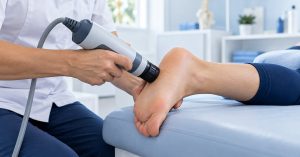
- High-Intensity Laser Therapy (HILT): Penetrates deeply to stimulate cytochrome c oxidase, boosting ATP and supporting perineural angiogenesis. May support oxygen delivery and nerve repair of damaged fibers.
- Focused Shock Wave Therapy (FSWT): Induces mechanotransduction and microtrauma that activates Schwann cells and may promote neurovascular regeneration through VEGF and NGF pathways.
- Electromagnetic Transduction Therapy (EMTT): Uses pulsed magnetic fields that may help normalize membrane potentials, restore axonal transport, and facilitate synaptic reorganization in the CNS.
These interventions are non-invasive, repeatable, and tailored based on the stage and type of neuropathy.
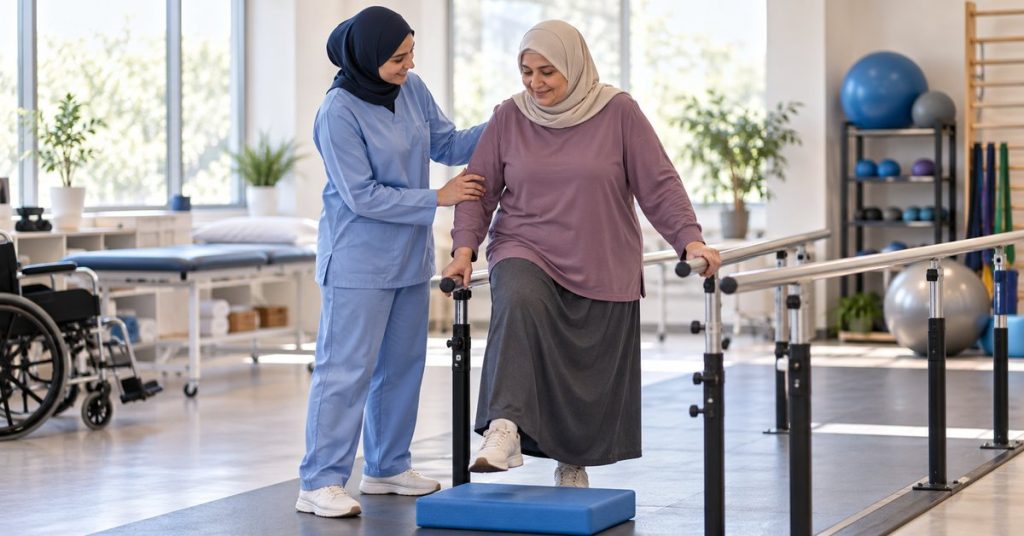
🧠 Neurofunctional Rehabilitation: Rewiring the Nervous System
Functional restoration requires movement-based neural retraining:
- Sensorimotor retraining: Recalibrates proprioception and improves body awareness through balance boards, textured surfaces, and eyes-closed coordination drills.
- Corticospinal integration: Enhances motor planning and execution via resisted tasks, mirror therapy, and bilateral coordination.
- Proprioceptive stimulation: Activates large myelinated fibers to reduce pain via vibratory input and light touch modulation.
- Autonomic regulation: Incorporates diaphragmatic breathing and vagal stimulation to stabilize systemic function.
Rehabilitation is personalized, progressive, and outcomes-based, focusing on return to daily function and independence.
Frequently Asked Questions
Is peripheral neuropathy reversible?
Sometimes. When the cause, such as a vitamin deficiency or nerve compression, is found and treated early, nerves can recover. Damage that has built up for years is harder to reverse.
What is axonal neuropathy treatment?
Axonal neuropathy means the nerve fiber itself is damaged. Treatment focuses on the underlying cause, plus therapy to ease pain and protect balance and strength.
Can magnetic therapy help neuropathy?
Magnetic therapy is a non-invasive option some patients use for nerve pain alongside other care. Evidence is still developing, so it is usually part of a broader plan.
What does functional neuropathy treatment involve?
It focuses on daily function, such as walking, balance and grip, using guided exercise and physical therapy alongside pain treatment.
Do neuropathy medications reverse nerve damage?
Common neuropathy medications can ease pain but do not repair nerves. That is why a plan often adds care for the cause and rehabilitation.
Where can I get treatment for peripheral neuropathy in Brooklyn?
Bay Way Pain treats neuropathy at 6010 Bay Parkway in Brooklyn. Call (718) 576-2001 to book an evaluation.
Ready to talk about your pain?
Bay Way Pain Medical Care, 6010 Bay Pkwy, 6th Floor, Suite 603, Brooklyn. We accept most insurances.
Request an Appointment Call (718) 576-2001