TL;DR
- TECAR warms tissue from the inside with radiofrequency energy.
- Shockwave sends sound-wave pulses into stubborn, long-standing problem areas such as heels and tendons.
- Laser uses light and is usually painless, often used for joint and nerve pain.
- None is “best” in general. The right one depends on what is causing your pain.
- All three are often paired with exercise or physical therapy, and an evaluation helps you choose.
If you are comparing TECAR vs shockwave vs laser, you are probably trying to figure out which one fits your pain before you book. All three are non-invasive, use no needles and need no downtime. They work in different ways, feel different on the skin and are often chosen for different problems. This guide walks through each one, how they compare and how our Bay Parkway office helps you decide.
The short version
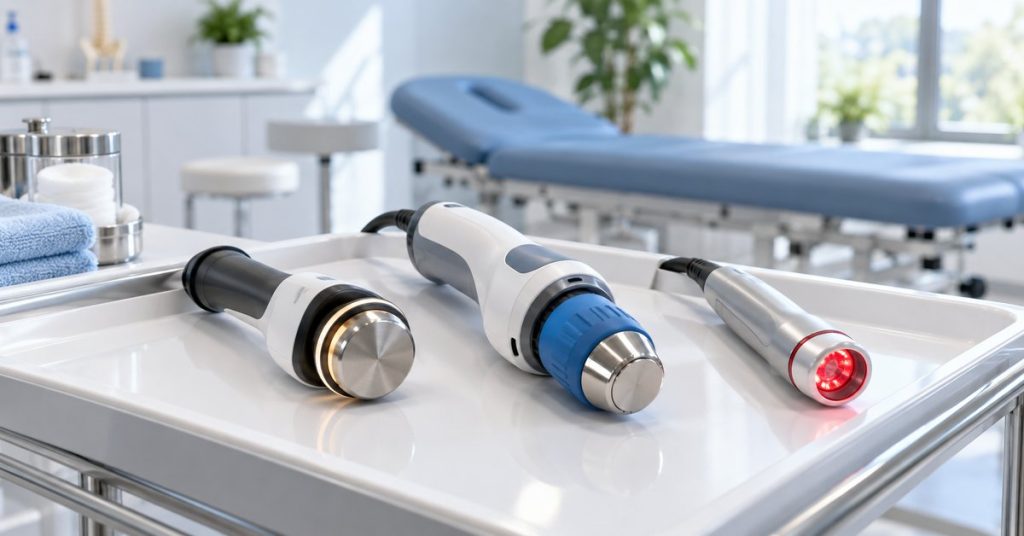
- What it uses: TECAR uses radiofrequency energy. Shockwave uses sound-wave pulses. Laser uses light.
- What you feel: TECAR feels like gentle, deep warmth. Shockwave feels like tapping pulses and can be uncomfortable. Laser usually feels like little or nothing.
- Often used for: TECAR for tight muscles, stiff joints and rehab. Shockwave for long-standing tendon and heel pain. Laser for joint pain, inflammation and nerve pain.
- Session length: TECAR 15 to 30 minutes. Shockwave 10 to 20 minutes. Laser often under 15 minutes.
- Needles or downtime: none for any of the three.
How TECAR therapy works
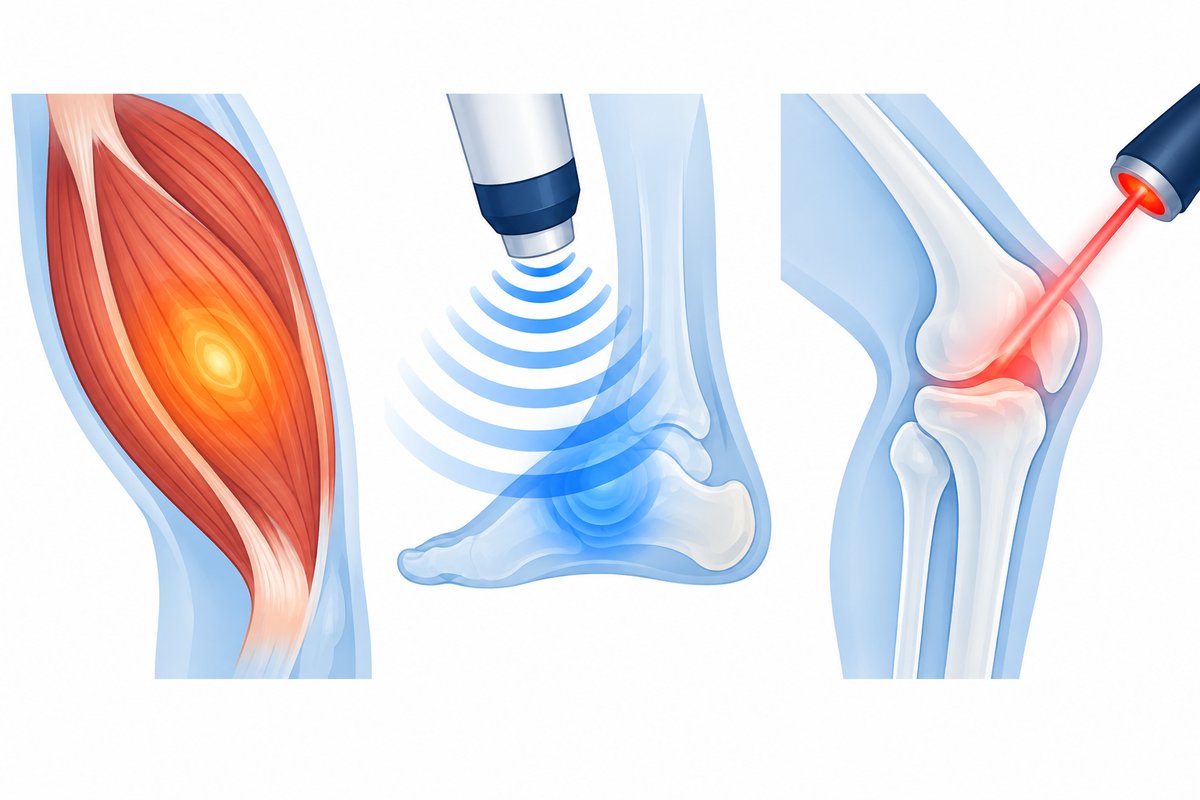
TECAR uses a handheld electrode to pass radiofrequency energy through the treated area. Your tissue’s natural resistance turns that energy into warmth deep inside. It is often used to relax tight muscles and ease stiffness so that therapy and exercise feel easier. Read more in our post on what TECAR therapy is, or see our TECAR therapy service page.
How shockwave therapy works
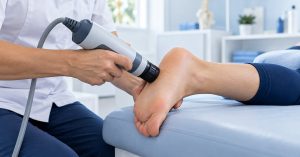
Shockwave therapy sends pulses of sound energy through the skin into a painful spot. It is mostly used for problems that have lasted months, such as plantar fasciitis, tennis elbow and some shoulder and tendon problems. Sessions can be uncomfortable for a few minutes, and most people need a short series. Our shockwave therapy page explains more.
How laser therapy works
Laser therapy uses focused light that is absorbed by the tissue. Most people feel little or nothing. It is often used for joint pain, inflammation and some kinds of nerve pain. See our laser therapy page for more.
TECAR vs shockwave: the main differences
TECAR vs shockwave is the comparison people ask about most, because both are used for muscle, tendon and joint pain. The difference is in how they work on the tissue.
- Feel: TECAR is warm and relaxing. Shockwave is a firm, tapping pressure that can be uncomfortable on a sore spot.
- Typical target: TECAR is often used over a wider area, such as a tight lower back or a stiff knee. Shockwave is aimed at a specific spot, such as the bottom of the heel or a tendon near the elbow.
- Typical timing: TECAR is often used during active rehab to make movement easier. Shockwave is more often considered when a tendon or heel problem has lasted months.
If your heel pain is the main issue, our post on shockwave therapy for plantar fasciitis goes into more detail.
Shockwave vs laser therapy, and TECAR vs laser
Shockwave vs laser therapy often comes down to comfort and the type of problem. Laser is the gentlest of the three, so it is often a fit if you are sensitive to pressure or the area is very tender. Shockwave is a stronger mechanical treatment and is usually saved for stubborn tendon and heel problems.
TECAR vs laser is a different kind of choice. Both are gentle. TECAR produces deep warmth that can loosen tight tissue before exercise. Laser produces little sensation and is often used for joint pain, inflammation and nerve pain. Some people use one, and some use both within the same plan.
Which one fits your pain?
As a general guide:

- Muscle tightness and stiffness, or rehab after injury: TECAR is often a fit.
- Heel pain or a tendon problem that has lasted months: shockwave is often considered.
- Joint pain, inflammation or nerve pain, or if you want a treatment you barely feel: laser is often a fit.
These are general patterns, not rules. Many people do best with more than one treatment, usually alongside physical therapy and exercise.
Who may not be a candidate
Each of these treatments has situations where it may not be used, or where extra care is needed. Before any session, your clinician will ask about your health history. Be ready to mention:
- Pregnancy, or a chance you may be pregnant
- A pacemaker or other implanted electronic device
- Cancer, especially near the area to be treated
- Bleeding problems or blood thinners
- Open wounds, skin infections or reduced feeling in the skin
For TECAR in particular, see our post on TECAR therapy side effects and who should avoid it.
How many sessions, and how long until you notice a change
The number of sessions varies with the problem, how long you have had it and how your body responds. All three are usually given as a series rather than a single visit. Some people notice a change after a few sessions, while others need longer, and results vary.
Your plan should be reviewed along the way. If you are not seeing progress, your clinician may adjust the settings, switch treatments or add a different approach.
Can they be combined?
Yes. It is common to combine one of these devices with hands-on therapy and an exercise plan. The device helps calm pain or loosen tissue, and the exercise keeps the progress going.
How we choose at Bay Way Pain Medical Care
At our Bay Parkway office in Brooklyn, your visit starts with an evaluation. We look at where the pain is, how long you have had it and what you have tried. Then we suggest the option, or mix of options, that fits.
Many of our patients come from Bensonhurst, Bath Beach, Dyker Heights and Bay Ridge. When you call, our team will ask about your pain, help you find a time and explain what to bring. Bay Way Pain Medical Care accepts Medicare and Medicaid. Coverage for a specific treatment depends on your plan, so check with our office before you start. You can schedule an evaluation online.
Frequently Asked Questions
Is TECAR or shockwave better?
Neither is better in general. TECAR is often used for muscle tightness and stiffness, while shockwave is often used for long-standing tendon and heel pain. Your evaluation decides which fits your problem.
Is laser therapy better than shockwave?
They are used for different things. Laser is usually painless and often used for joint and nerve pain. Shockwave is often used for stubborn tendon and heel problems.
Which of these treatments hurts the least?
Laser is usually the gentlest, and most people feel little or nothing. TECAR feels like deep warmth. Shockwave can be uncomfortable for a few minutes.
Can I have TECAR, shockwave and laser together?
Sometimes. Your clinician may combine treatments as part of a plan, usually alongside exercise or physical therapy.
Which one is right for me?
It depends on what is causing your pain. An evaluation is the best way to find out, because the same symptom can have different causes.
Is there any downtime after TECAR, shockwave or laser?
There is usually no downtime, and most people return to normal activity after a session. Some people feel mild soreness for a day or so after shockwave.
Does insurance cover TECAR, shockwave or laser therapy?
It depends on your plan. Bay Way Pain Medical Care accepts Medicare and Medicaid, and our office can check what your plan includes before you start.
Where can I get TECAR, shockwave or laser therapy near me in Brooklyn?
Bay Way Pain Medical Care offers all three at our office at 6010 Bay Parkway in Brooklyn. Call or book online to start with an evaluation.
Ready to talk about your pain?
Bay Way Pain Medical Care, 6010 Bay Pkwy, 6th Floor, Suite 603, Brooklyn. We accept most insurances.
Request an Appointment Call (718) 576-2001