TL;DR
- Laser therapy for pain uses focused light to calm inflammation and support healing in the treated area.
- It is non-invasive and drug-free, and most people feel only mild warmth or nothing at all.
- It is given as a course of several sessions, and results vary by condition and by person.
- It works best as one part of a plan that also includes movement and strengthening.
- Bay Way Pain Medical Care offers laser therapy at 6010 Bay Parkway in Brooklyn. Call (718) 576-2001.
What laser therapy for pain is
Laser therapy, also called photobiomodulation or low-level laser therapy, applies specific wavelengths of red and near-infrared light to the skin over a painful area. The light passes into the tissue underneath, where cells absorb it.
It is different from a surgical laser. It does not cut or burn tissue. The goal is to change how the tissue behaves, not to remove anything.
How laser therapy reduces pain
Research points to a few effects that work together:
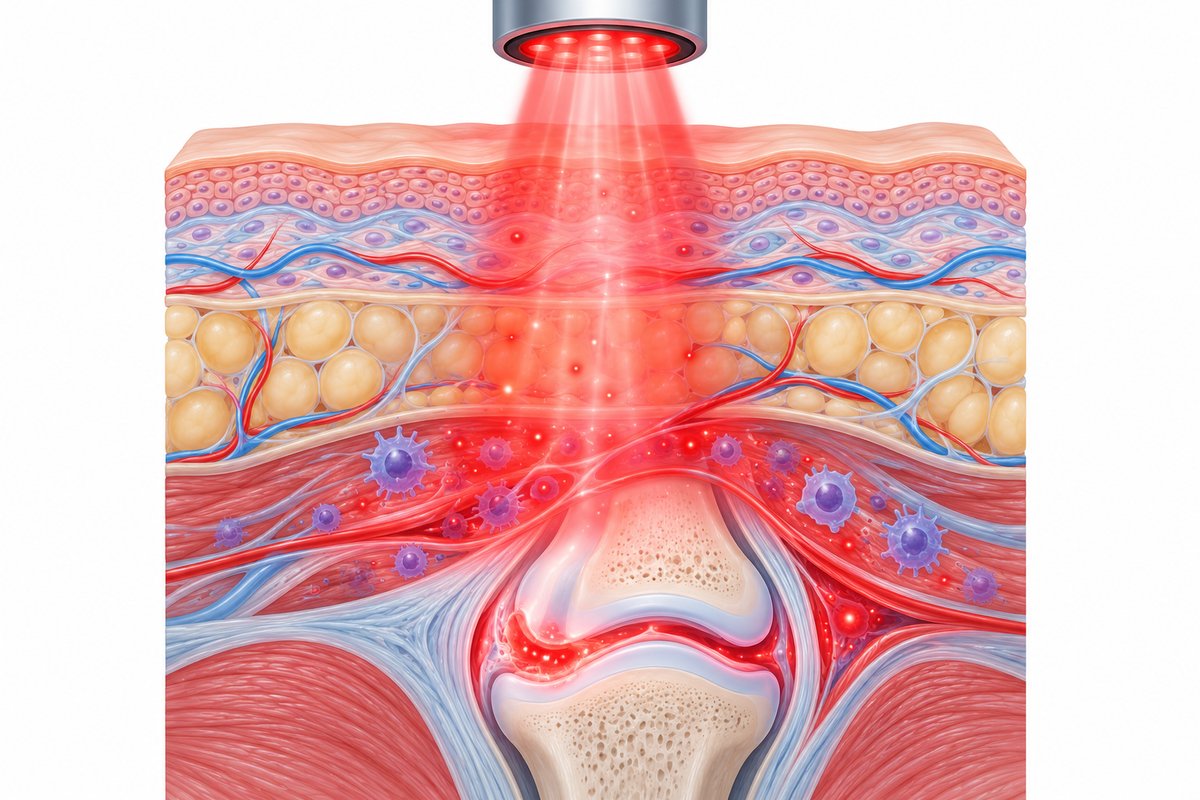
- More cellular energy. Light is absorbed by the mitochondria, which can help injured cells make more of the energy they need to repair.
- Less inflammation. Studies show reduced inflammatory signaling in treated tissue, which can mean less swelling and tenderness.
- Better local circulation. Improved blood flow brings oxygen and nutrients to the area.
- Calmer nerve signals. Some patients feel a short-term drop in pain right after a session.
These effects build over a course of treatment. One session on its own rarely changes much.
Conditions laser therapy may help
Laser therapy is most often used for pain where healing has stalled or inflammation keeps coming back:
- Knee pain and knee arthritis. See our knee pain page.
- Back pain and sciatica. Read laser therapy for back pain and sciatica.
- Neck and shoulder pain
- Tendon problems such as tennis elbow and plantar fasciitis
- Nerve pain, including peripheral neuropathy. Read laser therapy for neuropathy.
The evidence is stronger for some of these than others. Your doctor will tell you honestly whether laser is a good fit for your diagnosis or whether another option is likely to work better.
Why the diagnosis matters more than the machine
The same knee pain can come from arthritis, a tendon, a meniscus tear or a problem in the lower back. Light aimed at the wrong structure will not help. That is why laser therapy should start with a proper exam, not a walk-in session.
Dose and consistency matter too. A course that is stopped halfway is the most common reason people decide laser “did not work.” Handheld home devices also run at much lower power than clinical systems, so they should not be expected to do the same job.
How many sessions you may need
Plans vary, but a common pattern looks like this:
- Sessions: often 6 to 12, sometimes more for long-standing pain
- Frequency: usually 2 to 3 times a week at the start
- Session length: typically 5 to 15 minutes per area
- When change shows: many people notice a difference within a few weeks, while others take longer
Your doctor will check progress along the way and change the plan if it is not helping. For a step-by-step look at a visit, read your first laser therapy session.
Is laser therapy safe?
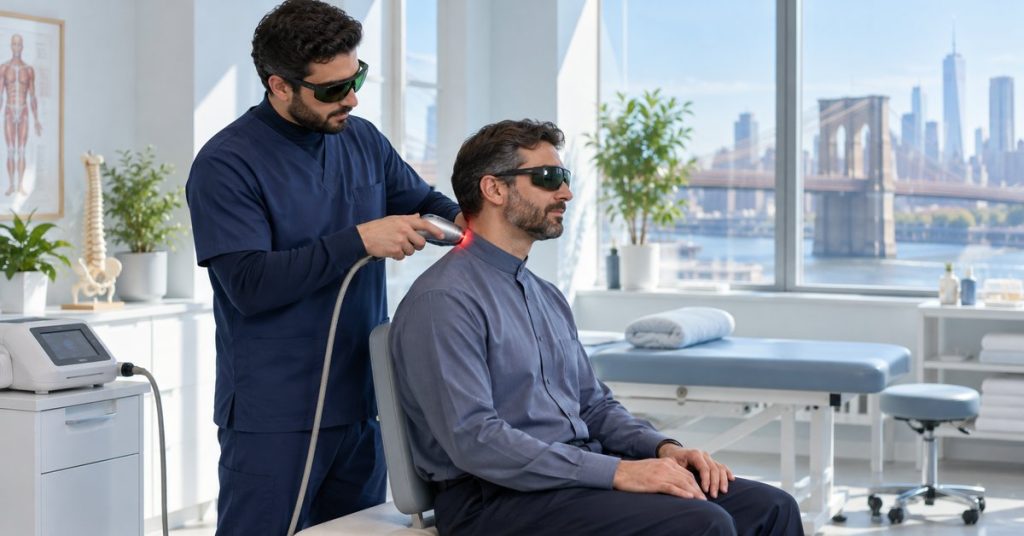
For most people it is low risk. Everyone in the room wears protective eyewear, and the light is never pointed at the eyes. Some people feel mild warmth or brief soreness afterward.
Laser therapy is usually avoided:
- Over a known or suspected cancer
- Over the abdomen or lower back during pregnancy
- Directly over the eyes or the thyroid
- Over skin that is very sensitive to light, or while taking medication that causes light sensitivity
Tell your doctor about your health history and medications before you start.
Laser therapy compared with other options
Laser is one of several drug-free tools. It is often combined with:
- Physical therapy to rebuild strength and movement
- Shockwave therapy for stubborn tendon pain
- Guided injections when a joint or tendon needs a more targeted treatment
Read laser, ultrasound or TENS for a side-by-side comparison, or see our laser therapy service.
Before you book
- Location: 6010 Bay Parkway, 6th Floor, Suite 603, Brooklyn, NY 11204
- Phone: (718) 576-2001
- Insurance: coverage for laser therapy varies by plan. Call and we will check yours before your first session.
- What to bring: any recent X-ray or MRI reports and a list of your medications
Frequently Asked Questions
Does laser therapy work for pain?
Studies show it can reduce pain and inflammation for some conditions, such as knee arthritis and tendon pain. Results vary by condition and by person.
Does laser therapy for pain hurt?
No. Most people feel mild warmth or nothing at all during a session.
How many laser therapy sessions do I need?
Often 6 to 12 sessions over a few weeks. Your doctor sets the number based on your condition and progress.
What conditions can laser therapy treat?
It is commonly used for knee, back, neck and shoulder pain, tendon problems and some types of nerve pain.
Who should not have laser therapy?
It is usually avoided over cancer, over the abdomen in pregnancy, over the eyes or thyroid, and for people with strong light sensitivity.
Where can I get laser therapy for pain in Brooklyn?
Bay Way Pain Medical Care, 6010 Bay Parkway, 6th Floor, Suite 603, Brooklyn, NY 11204. Call (718) 576-2001.
Ready to talk about your pain?
Bay Way Pain Medical Care, 6010 Bay Pkwy, 6th Floor, Suite 603, Brooklyn. We accept most insurances.
Request an Appointment Call (718) 576-2001