TL;DR: Low level laser therapy, also called photobiomodulation, uses light to support cellular activity and reduce inflammation in a treated area. It is painless, drug-free and requires no recovery time. It is given as a course rather than a single visit, results vary by condition and by person, and it works best alongside the rest of a treatment plan rather than on its own.
What low level laser therapy is
Laser therapy for pain uses specific wavelengths of light applied to the skin over a painful area. The light is absorbed by tissue, where it supports cellular energy production and local circulation. Unlike a surgical laser it does not cut or heat tissue, which is where the term “cold laser” comes from.
The effect is on the biology of the area rather than on the pain signal alone, which is why it is generally used for conditions where healing has stalled rather than for immediate symptom relief.
Why some laser treatment disappoints
Two things separate a useful course of treatment from a waste of time, and neither is the brand of the machine.
The first is the diagnosis. Light applied to the wrong structure achieves nothing, and the same knee pain can come from arthritis, a tendon, a meniscus or referred pain from the back. The second is dose and consistency. This is a course of treatment, typically delivered over several weeks, and an interrupted course is the most common reason people conclude it does not work.
Consumer handheld devices are a third factor. They operate at a fraction of the power of clinical systems and should not be expected to do the same job.
What a session is actually like
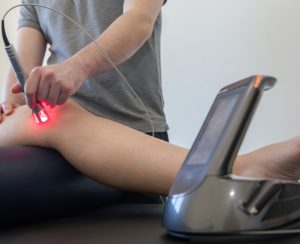
Everyone in the room wears protective eyewear, including the clinician. The area being treated is exposed, and the applicator is held over it or moved across it depending on the protocol.
Most areas take a few minutes. Most people feel either nothing at all or a gentle warmth. It should never be painful. There is no recovery period, no restriction on driving and nothing to take afterwards.
What the evidence supports
Systematic reviews are generally more favourable for chronic musculoskeletal conditions, such as neck pain and tennis elbow, than for acute injuries. Evidence for wound healing is stronger than for musculoskeletal pain overall.
Results vary with the condition, how long it has been present, and what else is in the plan. Anyone quoting a precise success rate for laser therapy across conditions is overstating what the research shows.
Who it suits
Laser therapy is often considered for:
- Tendon problems that have not settled with rest and rehabilitation
- Chronic neck or back pain where inflammation is part of the picture
- Knee pain from arthritis, as part of a broader plan
- Nerve-related pain, including some neuropathy presentations
- People who want to avoid injections or cannot take certain medications
Tell the clinician if you are pregnant, have a current or past cancer diagnosis, take medication that increases light sensitivity, have an implanted device, or have an active infection or open wound at the site. None of these is automatically a barrier, but each changes the decision.
Getting the most out of a course
Two things make the difference. Keep the schedule, because the effect is cumulative and gaps undo progress. And keep doing the rest of the plan, usually physical therapy, because reducing pain and inflammation is not the same as fixing the mechanics that caused them.
Laser therapy at Bay Way Pain is planned after an evaluation, with progress reviewed as the sessions go on rather than at the end.
Frequently Asked Questions
Does laser therapy hurt?
No. Most people feel nothing or mild warmth. If anything feels hot or sharp, say so during the session and the settings are adjusted.
How many sessions will I need?
It depends on the condition and how long it has been present. It is delivered as a course rather than a one-off, and the number is set after your evaluation.
When will I notice a difference?
Some people notice a change early, others notice nothing after one or two visits. A single session tells you very little either way.
Is it safe with other treatments?
It is commonly combined with physical therapy and other treatments. Tell the clinician everything you are having so the plan is coordinated.
Is it the same as the laser used in surgery?
No. Surgical lasers cut or heat tissue deliberately. This operates at much lower power and is applied to intact skin.
Talk to someone in Brooklyn
If inflammation and pain have outlasted the injury that started them, an evaluation is where to begin. Call (718) 576-2001 or request an appointment at our Brooklyn office on Bay Parkway.